

As dentists, we often talk about the importance of replacing missing teeth, but there’s a hidden reason behind that advice that goes beyond chewing, smiling, or even avoiding that “sunken” look. It’s something happening under the surface: bone loss.
What You Don’t See Will Cost You
Most people think losing a tooth is the end of the problem. But really, it’s the beginning of a countdown.
You can’t see it, but when a tooth is extracted, the bone that once held the root starts to shrink. Fast. Studies show you can lose as much as 50% of the bone width in the first year after tooth loss, and most of that happens in the first few months. And it doesn’t stop there: the longer you wait, the problem gets worse as bone height continues to decrease… and it could cost you future treatment options.
Fortunately, modern regenerative materials allow dentists to protect and preserve bone better than ever.
But there’s a catch: timing is everything.
Why Does the Bone Disappear?
Your jawbone is a smart, efficient structure. It stays thick and strong because it’s constantly stimulated by the pressure from chewing and biting, like a muscle that’s kept in shape through regular use.
But once that pressure is gone, the body thinks, “Well, we’re not using this area anymore,” and it starts recycling the bone for use elsewhere.
Unfortunately, that natural recycling process shrinks the bone, leaving less support for future dental implants, bridges, or dentures. It’s like Mother Nature quietly pulling the rug out from under your smile.
So where does this all happen?
Meet the “Ridge”
The alveolar ridge is the bony ridge of the jaw that holds the tooth sockets. It’s the raised arch of bone where your teeth sit. When a tooth is removed, this ridge becomes the center stage for bone loss.
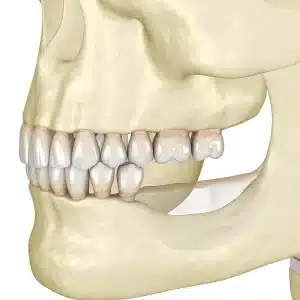
Immediately after extraction, the ridge is still mostly intact, but the socket is now empty. Without the tooth root to stimulate it, the ridge starts to shrink. The outer wall (especially the thin buccal side near the cheek) collapses inward.
Over time, the bone shrinks in both width and height, leaving a flatter, narrower foundations which is what makes future restorations harder to place.
“I’ll Just Wait” (Until It’s Too Late)
We hear it all the time:
“I’ll just get an implant later down the road.”
The problem is, without bone support, placing an implant later often requires additional procedures, like bone grafting, to rebuild the foundation first. And those aren’t just minor add-ons. Grafting can mean extra surgeries, more healing time, and higher costs.

In some cases, the loss of bone is so significant that even grafting can’t fully restore what was there. You might be left with fewer treatment options, or ones that aren’t as stable or long-lasting as an implant would have been.
Early intervention helps you avoid that costly, complicated road.
Ridge Preservation (The Smart Move)
So, what can you do?
If a tooth needs to be removed, the best time to protect the surrounding bone is right then — before the shrinking starts. That’s where ridge preservation comes in.
Ridge preservation is a simple, proactive step we can take at the time of extraction. It involves gently placing a bone grafting material into the socket to help maintain the bone’s shape and volume as the area heals. Basically, giving the body a head start on healing while keeping the bone from collapsing like an old lawn chair.
By preserving the ridge now, we keep the door open for implants, bridges, or other restorations down the road without the added hassle, cost, or healing time of bone grafting later.
Most patients have never even heard of ridge preservation, which is wild—because it’s one of the smartest, most cost-effective things you can do to avoid more invasive work later on.
How We Do It at Drews Dental
To give patients the best possible foundation for future dental work, we use a regenerative material called Genate™ Blend during ridge preservation procedures.
Genate is designed to mimic the natural structure of bone. It creates an osteoconductive scaffold that not only holds space, but also allows blood vessels to grow through and support healthy new bone development.
It’s made up of about 70% cortical and 30% cancellous allograft chips, which is a fancy way of saying: it’s structured enough to keep things stable, and porous enough to encourage healing.
- The mineralized cortical chips give support, strength, and long-term stability.
- The mineralized cancellous chips provide surface area and boost early bone regrowth.
We also use a diagnostic tool called SimplyPERIO — a quick, non-invasive saliva test that helps us catch signs of periodontal disease early. Gum disease is another sneaky cause of bone loss, and this test helps us stay ahead of it before it affects treatment plans.
All of this is part of the bigger picture: we’re not just serving smiles, we’re protecting the foundation that holds them up.

Your Best Smile Starts Today
If you’ve recently lost a tooth, or know one is coming out soon, this is the moment to act.
Bone loss doesn’t wait. It starts quietly, and by the time you feel the difference, it may already be too late for the simplest solution. Ridge preservation gives you a chance to stay ahead of the curve and keep your options open.
Don’t wait until the bone has packed its bags and left town. We’ve seen it. It’s not pretty.
Call us today at 207-782-5308 or reach out through our contact form while the foundation is still strong. Before the clock runs out.
Your future self (and your wallet) will thank you,