

Missing teeth can affect much more than your smile. They can make it harder to eat comfortably, speak clearly, and simply feel like yourself.
Whether you’re missing a few teeth, all of your teeth, or already have dentures that aren’t working as well as you’d like, good restorative dentistry is about more than filling the gaps. Your teeth should look natural, feel comfortable, and work well in everyday life.

Complete Dentures
Complete dentures, sometimes called full dentures, replace all of the teeth in the upper jaw, lower jaw, or both.
Traditional dentures rest on the gums and are removable. Denture adhesive is typically used to help keep them securely and comfortably in place.
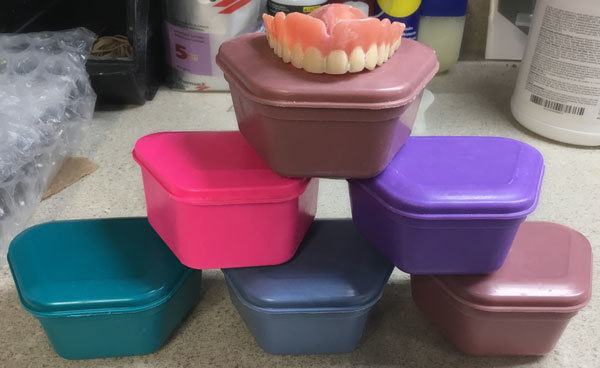
Full dentures may also be supported by dental implants for additional stability. Depending on the type of restoration, an implant-supported denture may be removable by the patient or fixed in place and removed only by the dentist.
What If I Still Have Teeth That Need to Be Removed?
An immediate denture can be made in advance and placed as soon as the teeth are extracted. That means you don’t have to go without teeth during the healing period, which could put quite a crimp on your social life!
The immediate denture is a temporary solution while your mouth heals and until your conventional denture can be made. Because the gums and underlying bone change shape during healing, especially after extractions, the immediate denture will typically need adjustments along the way to maintain a comfortable fit.
Partial Dentures
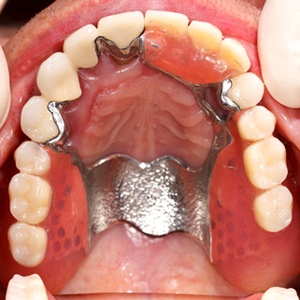
Partial dentures are used when one or more natural teeth remain in the upper or lower jaw. They replace the teeth that are missing while working with the teeth that remain.
A removable partial denture consists of replacement teeth attached to a pink, gum-colored base. A metal framework helps hold the partial in place inside the mouth. By filling the spaces left by missing teeth, a partial denture also helps prevent the remaining teeth from shifting or changing position.
The photo here illustrates a partial denture that is in place in the roof of the mouth. Notice the pink (gum colored) plastic base, the metal framework, all supporting the three visible teeth near the front of the smile.
What If My Current Dentures Don’t Fit Well Anymore?
Dentures don’t always fit the same way forever. Your mouth changes over time, and a denture that once felt comfortable may begin to loosen, move, rub sore spots, affect your speech, or make eating more difficult.
Sometimes an existing denture can be adjusted or relined. In other cases, replacing it may make more sense. For some patients, dental implants may also provide another option for improving denture stability. The important first step is figuring out why your dentures aren’t working well anymore and what can realistically be done about it.
Read more about the effects of poor-fitting dentures.
How Are Dentures and Partials Made?
Building a denture (and yes, it is a feat of engineering) can take from three to six weeks spread out across several appointments.
The first appointment is focused on gathering information about your mouth: where your remaining teeth are in relation to each other, how they come together when you bite, and measurements related to the movement and position of your jaw. A set of impressions will also be taken.
All of that information is then sent to the lab, where models are fabricated in the shape and position of the denture being made. At your next appointment, you’ll be able to “try in” the model so we can assess the color, shape, and fit before the final denture is cast. Any changes from that fitting appointment are sent back to the lab before the final denture is made.
At the next appointment, the finished denture is fitted in your mouth. Additional follow-up visits are scheduled as needed to address your bite, sore spots, or other issues that develop as you begin wearing it.
We know the number of appointments and the time involved can sometimes feel frustrating. But the mechanics of your mouth are highly individual, and getting the details right matters. After all, most people would like to enjoy a good steak once in a while. Your denture needs to be built correctly from the very beginning.

Ready to Talk About Your Options?