


“I just need a cleaning.”
We hear this all the time. And honestly, it makes sense. Your teeth look fine, nothing hurts. You brush. You floss… mostly. From your point of view, everything seems pretty normal.
The tricky part is that gum health isn’t something you can see in the mirror. Dentists and hygienists are looking to determine exactly what’s happening around and below the gumline, not just what shows when you smile.
So when you come in for an appointment, our goal isn’t to upsell you unneeded services, our goal is to figure out what kind of cleaning is actually appropriate for your mouth right now.
No assumptions. No surprises. Just clarity.
“I Just Need a Cleaning” (Famous Last Words)
That phrase usually comes from a good place. Most people equate dental health with how their teeth look and feel. If there’s no pain and no obvious problem, it’s easy to assume everything underneath is fine, too.
But gum disease doesn’t work that way.
Here’s what that difference can look like beneath the surface:
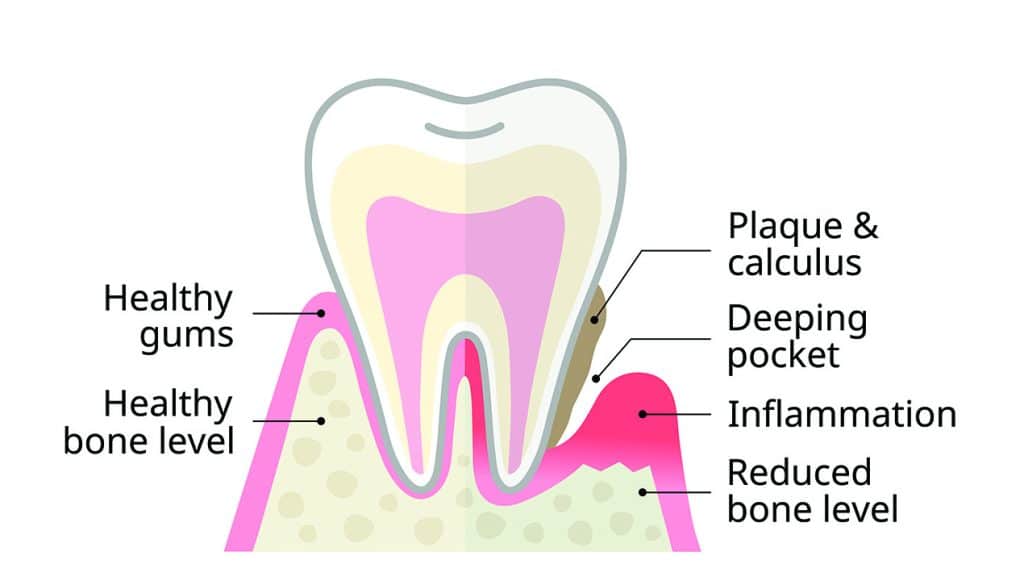
You can have active inflammation, infection, or bone loss without any discomfort at all. That’s why dentists rely on exams and measurements, not just appearances, to decide what kind of care you need.
When Heavy Tartar Comes First: Debridement
Sometimes, there’s so much hardened tartar on the teeth that we can’t even properly see the gums yet. When that happens, the first step may be debridement.
Debridement is not a deep cleaning.
It’s not a final diagnosis.
And it’s definitely not a judgment.
It simply means removing large deposits of tartar so we can actually evaluate what’s going on underneath. This happens more often than people realize, especially if it’s been a while since the last professional cleaning.
Until that buildup is removed, it’s impossible to accurately measure gum health. Think of it as clearing the windshield before deciding where you’re headed.
How Gum Health Is Actually Measured
This is the point where decisions are made.
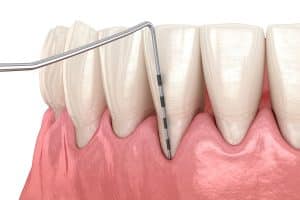
Once the teeth and gums are visible, we evaluate gum health using periodontal measurements taken in millimeters, along with several other clinical signs.
We’re looking at things like:
- Bleeding during probing
- Inflammation or swelling
- The depth of the gum pockets
- Tooth stability over time
Healthy gums sit snugly around the teeth. When infection is present, those measurements deepen, and bleeding becomes more common.
Here’s the key takeaway: Gum health is determined by what’s happening below the gumline, not by how white or straight your teeth look.
This is also where self-diagnosis quietly falls apart. You can’t see these measurements at home, and you shouldn’t have to guess.
When a Regular Cleaning Is Enough
Sometimes, the recommendation is exactly what everyone hopes for.
If your measurements are healthy and there’s no sign of gum disease, a routine cleaning (prophylaxis) is absolutely the right answer. This type of regular cleaning focuses on removing plaque and tartar from above the gumline and keeping everything on track.
This is the scenario we’re always happy to confirm.
No one here is ever disappointed when a regular cleaning is all that’s needed. It’s the simplest, least invasive outcome, and we’re happy when it applies.
Sometimes, that really does mean “just a cleaning.” Other times, the exam shows that a different approach is needed. Either way, the recommendation starts with an exam, not an assumption.
When It’s Not “Just a Cleaning”
While a routine cleaning works a lot like a basic car wash, periodontal treatment is more like choosing to clean the undercarriage of the car. It’s not something any of us choose for fun, but it’s necessary when there’s buildup happening underneath.
Anyone who has lived through even one New England winter understands the importance of taking their car to the car wash. With the exception of my wife, who seems to believe there’s a magic car fairy (that would be me) who waves a wand and poof! the car is clean again. But it’s not just about washing off the dirt so it looks shiny. If you don’t clean the undercarriage, all that rock salt works its way into the nooks and crannies and causes some very expensive repairs down the road. Sometimes the kind that involve shopping for a new car.
Trust me, no one comes in asking for deep clean over a routine cleaning. But if measurements show infection below the gumline, a routine cleaning isn’t enough to address the problem.
In those cases, periodontal treatment is recommended. The difference is straightforward:
- Routine cleaning cleans above the gums
- Periodontal treatment cleans below the gums
This deeper cleaning is usually done in sections (or quadrants) of the mouth so it can be thorough and comfortable. Numbing may be used, not because anything has gone “wrong,” but because we’re working in areas you can’t clean on your own.
The goals are simple and practical:
- Remove bacteria
- Reduce inflammation
- Give the gums a chance to heal and tighten back up
No drama. Just treating what’s actually there.
Why Periodontal Maintenance Isn’t a 6-Month Cleaning
Once someone has had gum disease, their long-term routine care needs change.
That’s where periodontal maintenance comes in. This isn’t a punishment and it isn’t temporary. It’s ongoing care designed to keep infection from returning.
Unlike a standard six-month cleaning, periodontal maintenance still involves cleaning below the gumline. Appointments may be more frequent, and the approach is more detailed.
The good news is that today’s tools and techniques make this care far more comfortable than people expect. Many patients are surprised by how manageable it feels once they know what to expect.
Why Catching Gum Disease Early Changes Everything
Timing matters. When gum disease is caught early, treatment is usually less invasive, spread over fewer appointments, and more predictable long term.
When it’s caught later on, or treatment is deferred, infection can deepen, bone loss can occur, and teeth can become less stable.
This isn’t about fear. It’s about understanding that early care is almost always simpler than delayed care.
Why Dentists Focus So Much on Gums
Gums are the foundation that holds everything else in place.
You can’t maintain healthy teeth long-term if the supporting structures are compromised. Our focus is always on preserving what you have, preventing progression, and avoiding bigger problems whenever possible.
That’s why we keep talking about your gums — even when your teeth look fine.
The Better Question to Ask
Instead of declaring, “I just need to get a regular cleaning!”
Try asking, “What does my gum health need right now?”
That shift changes the entire conversation. Licensed dental providers are trained to evaluate, explain, and recommend. Patients are partners in the process. You aren’t expected to diagnose yourself.
Clarity is the goal. Everything else follows from there.
Dentistry tends to live in the space between “everything feels fine” and “I wish I’d caught this sooner,”